Books kept me thinking lately


So indeed, lately it’s easy to feel lost in the constant stream of discouraging news. You probably know exactly what I’m talking about... Yet, I’m not giving up. I keep following the breadcrumbs of extraordinary, intriguing thoughts and updates about the quieter, stealth-mode unfolding of the green transition. This little article is an experiment: an invitation for you to follow me in this endeavour.
Here is my takeaway: there are positive developments on sustainability. Even nowadays. And despite political headwinds and loud counter-narratives, green technologies, sustainable thinking, and systemic transition are still moving forward.
Yes, you heard it. This is not denial, nor techno-optimism, and certainly not a belief system. Incredible breakthroughs are happening, but they often get buried under the exhausting noise of scandals, conflicts, and daily crises. However, the past years of regulatory, economic, investment, educational, and cultural efforts have had a real, lasting impact. And they continue to shape what comes next.
This is especially visible in finance: even with recent regulatory softening, strong ESG expectations remain embedded across the financial system in EU countries. Yes, even with the Omnibus law being watered down, these duties remain firmly in place. And through value chains, lending structures, and capital allocation, the sustainability transition is still actively being shaped.
At the same time, important global developments, - like the High Seas Treaty coming into effect, or China’s rapid advances in green technologies and emissions reduction - point toward a new present, not a distant future.
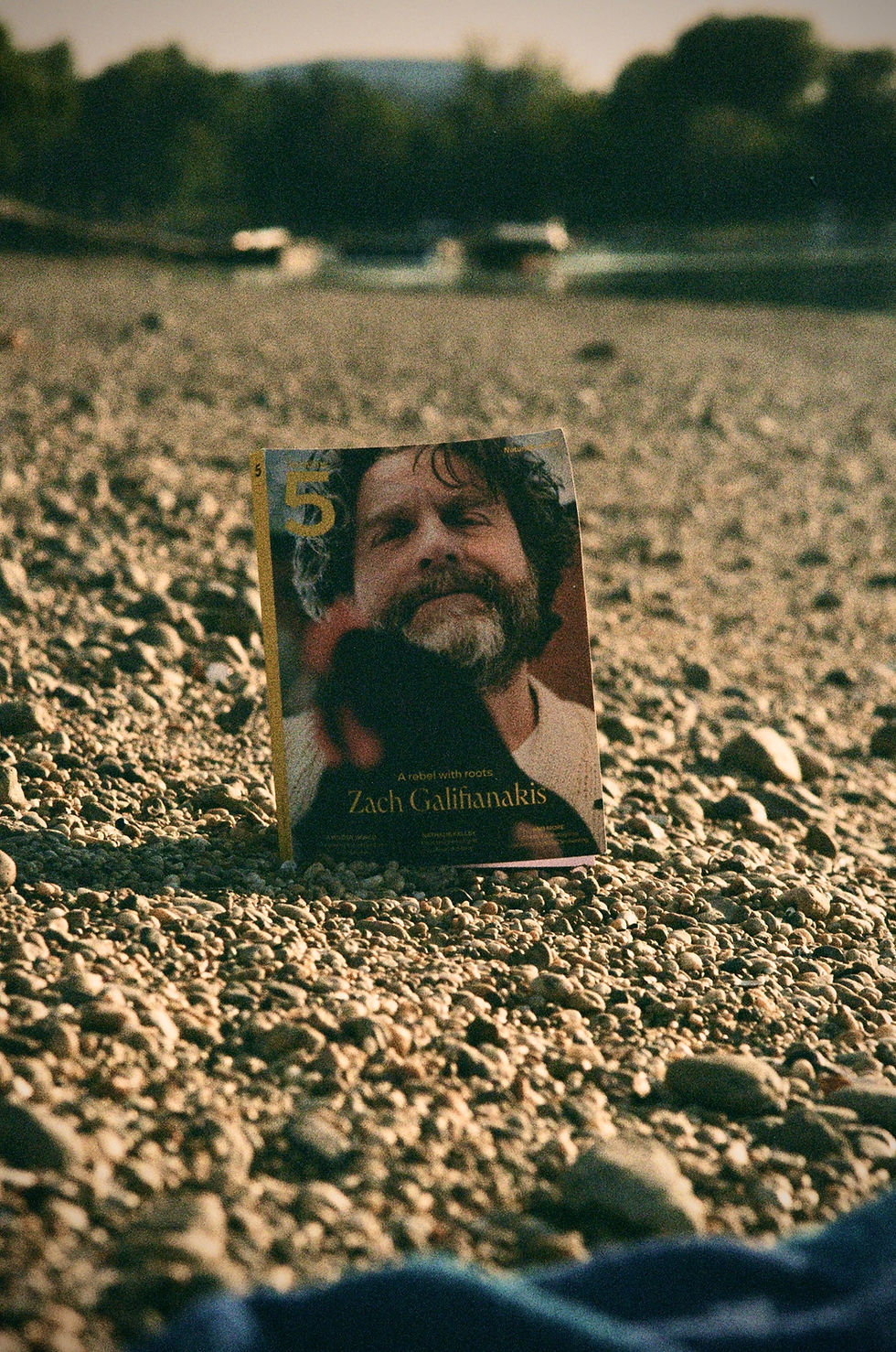
And, of course, we should not forget the courageous, extraordinary individuals who keep doing remarkable work, maintaining sustainability and inspiring all of us along the way. At that point, I want to highlight the ongoing inspiration I draw from Imagine5, along with the work of Hannah Ritchie, James Stewart and Sam Bentley, and many more, who tirelessly demonstrate that sustainability is not a theory, it is already part of our present.
Anyway. I don’t want to dive into heavy economic or political theory here. What I want to say is simpler: some things take time. Time to mature. And it also took time for me to find the right lenses to understand them.
That’s where books come in.
For me, reading is not an escape from systems-level change; it’s a way to stay grounded within it. These books didn’t just expand my knowledge; they helped me connect external transformation with internal clarity.
Even though they are almost 7, 5, or 4 years old, I only found them recently, - despite sustainability being at the core of my interests for a long time. And that, too, feels telling.
For those who, like me, are looking for inspiration and thoughtful provocation, I wholeheartedly recommend these three books. Indeed, they are not brand-new, all three deliver meaningful messages, strengthening not just the knowledge about sustainability but also our hope and enthusiasm:
Fully Automated Luxury Communism (2019) by Aaron Bastani offers a provocative, optimistic vision where technology, automation, and progressive policies could make abundance accessible for all. The term “communism” here is not about restoring a system burdened with negative historical experiences, but about sketching a radically new vision for the future, breaking with narratives of scarcity, sacrifice, and constant austerity. (Thanks, Daniel Krüger, for recommending it!)
Sustainable Hedonism, A Thriving Life that Does Not Cost the Earth, (2021) by Orsolya Lelkes, PhD (a fellow Hungarian professional, living in Vienna) starts from the premise that a good life and sustainability are not mutually exclusive. Drawing on empirical research, Lelkes shows that well-being (happiness, satisfaction) beyond a certain material threshold comes not from increasing consumption but from relationships, autonomy, and meaningful activities. “Sustainable hedonism” describes a lifestyle that uses fewer resources while providing more joy. While reading, I often felt that I wasn’t just engaging with a book, but with an entire space for reflection. A set of questions I’ve been grappling with for a long time. As a professional who thinks through theatrical methods or simply as someone trying to make sense of personal -and sometimes intergenerational- patterns, blockages, unresolved traumas, joys, and disconnected relationships, the book spoke to me on many levels.
And last but not least
The Climate Optimist Handbook (2022) by Anne Therese Gennari, which combines practical strategies with mindset work to stay hopeful and effective in tackling climate challenges. This highly versatile book blends scientific and social insights with remarkable, personal examples, offering accessible, relatable guidance for living greener everyday lives. I certainly resonated with many of its thoughts and experiences it shares, and many of its theses feel particularly relevant in these challenging times. I myself was inpired in many ways.
All in all, all three books strengthened my belief that culture and mindset matter. Narratives matter. Time matters. And without healthy inner, psychological processes, we won’t be able to live sustainably, as individuals or as societies. Reconnecting to ourselves, to each other, and to the world we’re part of is essential if we want to move beyond an extractive, over-consuming, atomized way of life.
So if you’re feeling overwhelmed, discouraged, or simply tired of doomscrolling, I invite you to slow down and open one of these books. Or the earlier-mentioned channels. As I learned from Anne Therese Gennari, we should keep ourselves fit, and don't forget to consume positive news as well. I doubt we’ll regret it.